What to Do After a Road Traffic Accident in Wicklow: A Legal Checklist
Navigating the aftermath of a road traffic accident (RTA) is a distressing experience that requires immediate, calculated action to protect both your physical well-being and your legal rights. In the scenic but often narrow and winding roads of County Wicklow, from the N11 corridor to the Sally Gap, accidents can occur due to a variety of environmental and human factors. Understanding the specific legal obligations under Irish law is essential for any motorist.
The following checklist, compiled by Cullen O’Beirne Solicitors, outlines the critical steps you must take following a collision to ensure compliance with the Road Traffic Acts and to preserve the integrity of any future legal claim.
1. Immediate Safety and the Duty to Stop
Under Section 106 of the Road Traffic Act 1961, there is a mandatory legal obligation to stop your vehicle at the scene of an accident. Failure to do so is a serious criminal offence. Your first priority must be safety: turn on your hazard lights and, if possible, move to a safe location to avoid secondary collisions. If there are injuries, you are legally required to provide “appropriate assistance” to the injured parties.
2. Reporting to An Garda Síochána
The necessity of calling the Gardaí depends on the severity of the incident. If the accident results in personal injury, you must report it immediately to the nearest Garda station (such as Wicklow Town,Greystones Arklow, or Bray). Even in “material damage only” cases where the other party refuses to exchange details or leaves the scene, a formal report is vital. A Garda report serves as a foundational piece of evidence in establishing the facts of the occurrence.
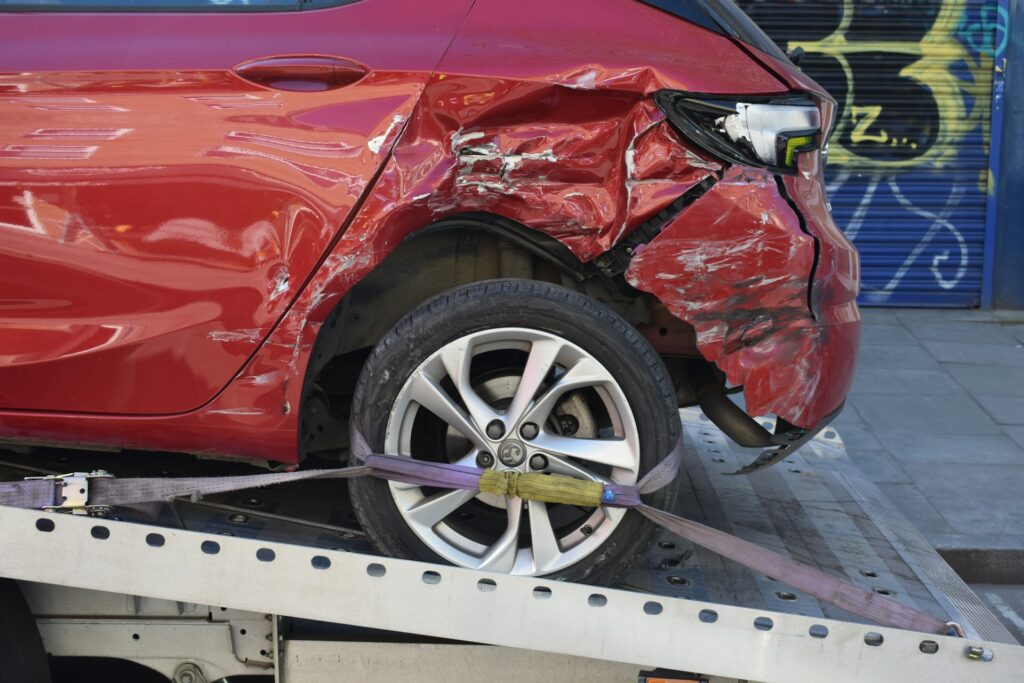
3. Exchange of Information
You are required to provide your name, address, vehicle registration number, and insurance details to any person “having reasonable grounds for requiring them.” It is highly recommended that you also obtain:
The name and contact information of the other driver.
The make, model, and registration of the other vehicle.
The name of their insurance provider and their policy number (often found on the windscreen disc).
4. Evidentiary Documentation at the Scene
The “Golden Hour” following an accident is the most critical time for gathering evidence. Most modern legal practitioners emphasize the “contemporaneous record” as the most reliable form of proof.
- Photographs
Take clear photos of the positions of the vehicles, the damage sustained, and the surrounding road conditions (e.g., skid marks, weather, or obscured road signs).
- Witnesses
If bystanders witnessed the event, ask for their names and phone numbers. Independent testimony is often the deciding factor in liability disputes.
- Dashcam Footage
If you or the other driver have a dashcam, ensure the footage is saved immediately, as many systems overwrite data within hours.
5. Seek Medical Attention
Even if you feel “fine” immediately following the impact, the adrenaline response can mask symptoms of soft-tissue injuries, such as whiplash. From a legal perspective, a medical report generated shortly after the accident is essential to prove “causation”—the link between the accident and your injuries. Delaying a medical visit can allow insurance companies to argue that your injuries were sustained elsewhere.
6. Avoid Admissions of Liability
While it is natural to feel shaken, avoid making statements such as “I’m so sorry” or “I didn’t see you.” Under the principles of the law of torts, such statements can be interpreted as an admission of negligence. Stick to the facts when speaking with the other driver and the authorities. The final determination of fault is a legal matter involving insurance adjusters and solicitors.
7. Notify Your Insurance Provider
Most insurance policies contain a clause requiring you to notify them of any accident within a specific timeframe (usually 24 to 48 hours), regardless of who was at fault. Failure to notify your insurer can lead to a breach of contract, potentially voiding your cover for the incident.
8. The Role of the Injuries Resolution Board (IRB)
Almost all personal injury claims arising from road traffic accidents must first be submitted to the Injuries Resolution Board (formerly PIAB). This is a mandatory independent body that assesses damages. However, the process involves strict timelines and complex paperwork. Engaging a solicitor early ensures that your application is accurate and that you do not settle for an assessment that undervalues your long-term recovery needs.
9. Legal Time Limits (Statute of Limitations)
Under the Statute of Limitations (Amendment) Act 1991, the general time limit for initiating a personal injury claim is two years from the date of the accident. While this may seem like a long period, the gathering of medical evidence and expert reports takes significant time.
If you have been involved in a road traffic accident in Wicklow, contact Cullen O’Beirne Solicitors for expert guidance through the legal landscape.
Contact Cullen O’Beirne Solicitors Today
For more information on Conveyancing, speak with a solicitor today